
Modern commercial and campus buildings are increasingly under pressure to reduce energy use, lower operational costs, and meet sustainability goals. But while the focus is often on flashy green tech or major equipment overhauls, one of the most powerful tools for energy savings is already running behind the scenes: reducing building energy waste with OT networks.
At the heart of smart building automation, a robust and well-functioning OT network helps coordinate everything from HVAC scheduling to lighting control. When working properly, it can dramatically reduce the three largest energy drains in large buildings: HVAC systems, lighting, and plug loads. Let’s look at how these systems contribute to energy waste—and how your OT infrastructure can help fix it.
What Is ESG, and Why Does It Matter to OT Professionals?
If you’re in building operations, you’ve likely heard the term ESG—but what does it really mean for your day-to-day work?
ESG (Environmental, Social, and Governance) is a framework for organizations to assess their performance beyond financial metrics, focusing on their environmental impact, treatment of people, and ethical practices. Although governance often receives significant attention in corporate settings, facility managers and system integrators are most likely to engage with the environmental aspect.
Why? Because buildings account for a massive share of global carbon emissions—around 30% by some estimates. Reducing energy consumption in HVAC systems, lighting, and plug loads is one of the most direct ways to cut emissions and meet ESG targets. That makes energy efficiency not just a maintenance task, but a core part of a company’s sustainability strategy.
The push for ESG reporting is growing. More investors are demanding it, governments are starting to regulate it, and large tenants increasingly expect it from the buildings they lease. If you manage or support OT systems, your work directly affects how a building performs against those ESG goals.
This is where OT networks play a critical role. A fast, clean, and well-monitored OT network ensures that automation systems run as they should, enabling smarter control and real-time adjustments that save energy—and reduce emissions.

Drain #1: HVAC Systems
HVAC is the single biggest energy user in large commercial and institutional buildings. In colder climates, space heating alone can consume over 50% of a building’s total energy. Even in moderate climates, HVAC systems are responsible for a significant share of electricity use due to cooling, fans, and pumps.
These systems run constantly, respond to a wide range of variables (like outdoor temperature and occupancy), and are often oversized for peak loads. Without fine-tuned control, HVAC units can easily waste energy by heating or cooling unoccupied spaces or running during off-hours.
Modern smart building systems can combine occupancy data, CO2 sensors, and external weather inputs to dynamically adjust heating and cooling setpoints. Demand-controlled ventilation can cut energy use by only conditioning air when and where it’s needed. But all of this relies on devices communicating properly through the OT network.
If your BACnet devices are constantly broadcasting unnecessary WHO-Is messages, or if large portions of your traffic are timing out, HVAC automation will be sluggish or completely ineffective. That’s where tools like OptigoVN come in. By helping you detect traffic floods, dropped packets, or offline devices, OptigoVN keeps your automation systems in sync—which is essential for HVAC efficiency.
Appalachian State University implemented a room usage calendar-based HVAC scheduling tool (RUSch) on the third floor of an institutional building. By integrating room reservation data into their building automation system, they adjusted HVAC operations to align with actual room usage. This optimization led to a reduction in room-specific energy flows by approximately 40% in total and 26% on weekdays, beyond the savings achieved by default HVAC scheduling.

Drain #2: Lighting
Lighting typically accounts for 20% to 30% of electricity use in commercial buildings. While replacing outdated lighting with LEDs is a good first step, major energy savings only come when lighting systems are automated.
Building automation systems can turn lights on or off based on occupancy, dim them based on daylight levels, and schedule lighting by area and use case. But this only works if sensors, controls, and lighting panels are communicating properly over the OT network.
If the network is misconfigured or lacking visibility, lights might stay on unnecessarily, especially in large spaces like conference rooms, storage areas, or stairwells. These inefficiencies add up quickly in 24/7 operations like hospitals or campus facilities.
OptigoVN helps reduce this risk by giving you clear visualizations of network performance and device communication. With Site Scope+, you can even share network snapshots and diagnostics with lighting vendors or contractors without giving up full system access. This speeds up troubleshooting and ensures that controls are working as intended.
As buildings add more lighting zones or sensors, the risk of network overload grows. Using OptigoVN to identify traffic bottlenecks and manage broadcast traffic can ensure that lighting controls remain responsive and efficient, even as systems scale.
As a real-world example, Optigo Network partners ALC New England were able to help their university campus clients track down and repair a serious broadcast issue that was slowing down the entire OT network. Using OptigoVN, they discovered that a misconfigured occupancy lighting sensor on another network was to blame. Tuning the COV values in turn helped contribute to an over 30% increase in network health score.
Drain #3: Plug Loads
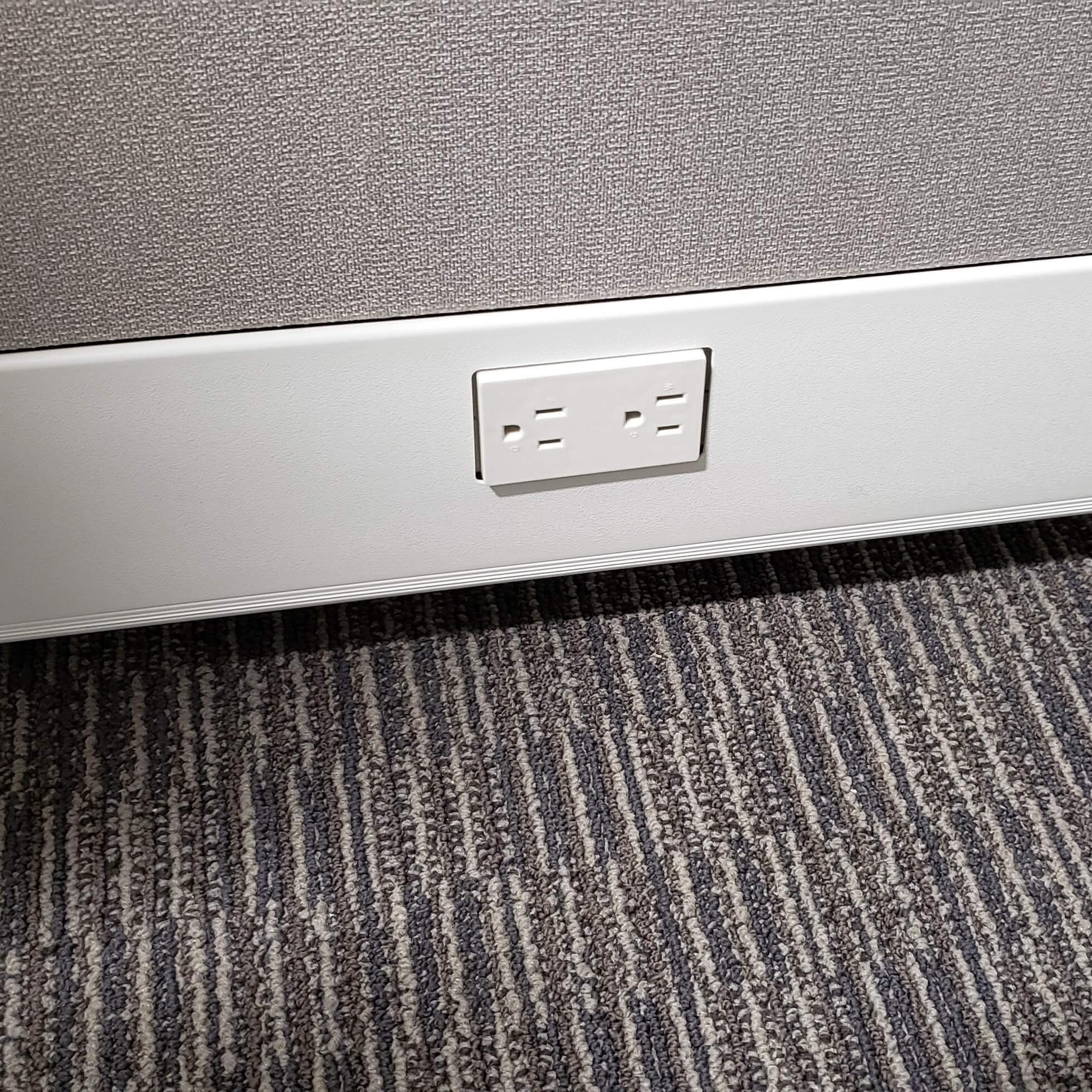
Plug loads—everything plugged into standard wall outlets—can represent 15% to 20% of a commercial building’s energy use. This includes computers, monitors, chargers, vending machines, kitchen equipment, and lab gear. Because these devices are often distributed throughout a building and individually managed, they’re easy to overlook but can add up to significant waste.
Unlike HVAC or lighting, plug loads are more dispersed and harder to control directly. However, advanced building automation systems are beginning to use smart outlets and power strips that can shut off equipment based on occupancy or scheduling. To do this effectively, you need a responsive OT network that can gather real-time occupancy data and send timely commands to shut off devices.
If occupancy sensors are offline, or network lag prevents timely responses, plug load automation won’t work. That’s why visibility into sensor and controller status is so critical. OptigoVN makes it easy to track these components and identify misbehaving devices before they undermine your energy strategy.
At Johnson Controls’ Milwaukee 507 Building HQ, a renovation in 2019 incorporated smart building technologies aimed at enhancing energy efficiency. Specifically, 81 Bert plug load control devices were installed across the third floor, enabling precise measurement and control of electrical outlets and circuits. This implementation led to an annual energy savings of approximately 15,000 kWh on that floor alone. The integration of these devices allowed for effective management of plug loads, contributing significantly to the building’s overall energy conservation efforts.
OT Networks as the Enabler of Energy Efficiency
A high-performing OT network doesn’t just prevent downtime or simplify diagnostics—it actively enables better energy performance. From HVAC optimization to lighting controls to plug load management, automation systems can only be as effective as the networks they depend on.
In this way, OT professionals are becoming unsung heroes in the push for greener, more efficient buildings. By maintaining clean, fast, and visible networks, you’re directly supporting decarbonization and ESG efforts in your organization.
Tools like OptigoVN provide the visibility and diagnostics you need to keep systems connected and responsive. With features like Site Scope+ for secure data sharing and device-level insights for faster troubleshooting, OT professionals are better equipped than ever to help their organizations save energy, reduce emissions, and meet ESG targets.
Ready to take your OT network to the next level?
With Optigo Visual Networks, client OT network monitoring and troubleshooting just got easier. To find out for yourself, request your free account and start exploring today.