Key Takeaways
- Fault detection and diagnostics (FDD) rely heavily on OT network readiness for accurate performance; poor network health skews results.
- Case studies like CBRE and ENFRA highlight that system issues often stem from configuration drift rather than hardware failure.
- Before implementing FDD, baseline the network to identify its health score and avoid installing applications on an unstable foundation.
- Remediating network issues, such as excessive polling or discovery traffic, is critical for achieving reliable monitoring and analytics.
- Establish a stable network first, then layer on FDD and energy analytics for trustworthy performance data.
Related Reading
The applications being pitched to systems integrators and facility operators right now are the most capable the industry has ever seen. Fault detection and diagnostics. Continuous energy analytics. Digital twins. Battery storage orchestration. The ROI claims are substantial — the US Department of Energy reports that adopters of automated FDD are seeing median whole-building portfolio savings of 7%, and Pacific Northwest National Laboratory has estimated that up to 29% of commercial building energy consumption could be avoided through better controls and fault correction.
None of that applies if the OT network underneath isn’t ready to carry it. And for most buildings, it isn’t.
The Cost of Doing it in The Wrong Order
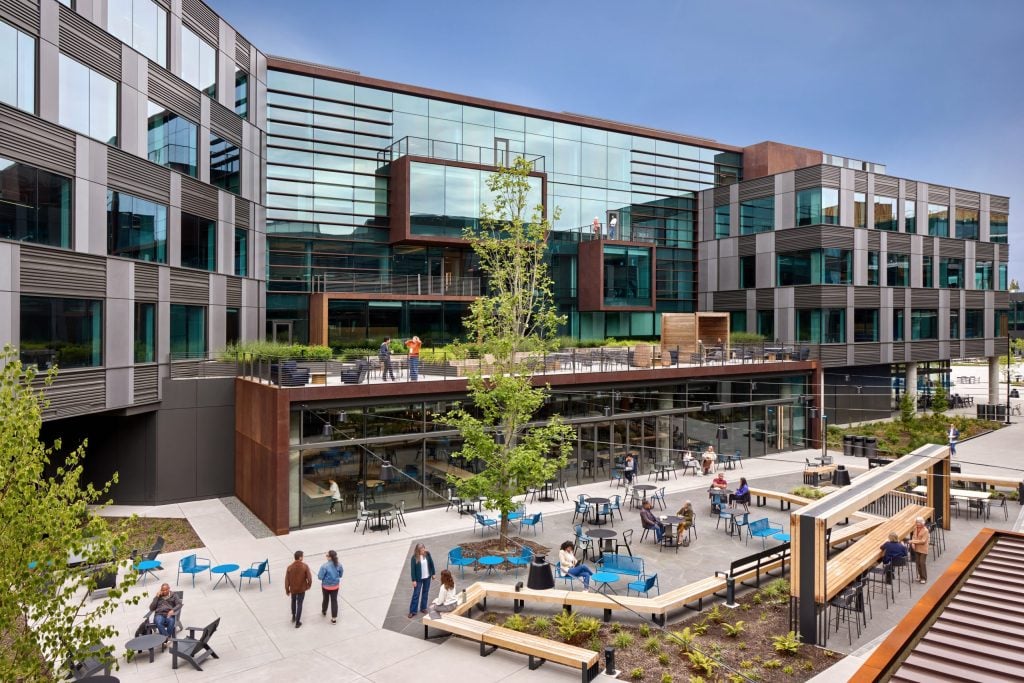
At a global tech company’s 80-building, 50,000-occupant headquarters campus, CBRE spent months chasing intermittent heating and cooling complaints that the BMS front-end reported as fully operational. The fix, when it finally came, had nothing to do with the automation layer. A single BACnet router had quietly been carrying a decade of cross-campus traffic it was never designed for — a configuration drift issue producing “Busy Router” messages invisible to the BMS. Once the problem was visible at the packet layer, the team split the Iconics server topology, and the network health score moved from a critical 32% to 72%.
The more revealing number is what accumulated while the problem was invisible. From June 2023 to May 2024, 118,000 hours of equipment failed to run as scheduled. Thirty-eight percent of equipment failed to turn on for more than half its scheduled operating days. The consequence wasn’t only comfort complaints — the energy data the client used to track efficiency and sustainability performance was built on a fundamentally inaccurate picture of how the buildings were actually running.
CBRE isn’t an outlier. In OptigoVN’s 2025 State of the Network Report, across roughly 2,008 monitored networks, 34.1% of networks fell in the Critical health range (under 50%) and another 37.4% in Warning. Roughly 28% were Healthy. Layer FDD or energy analytics onto either of the first two groups and you’re giving the application bad inputs before it starts.
What “Ready” Actually Means at the Packet Layer
“The BAS is running” isn’t the same as network readiness. FDD and energy analytics place very different demands on an OT network than a live graphics page does. They assume commands reach their targets, trend data is contiguous, and things like Change of Value updates arrive without being drowned out.
Across 24 million analyzed BACnet packets in Optigo’s 2025 dataset, the pattern was consistent:
- 60% polling traffic (ReadProperty and ReadPropertyMultiple) vs. only ~5% Change of Value notifications — the more efficient, event-driven pattern FDD platforms rely on to catch short-duration anomalies
- 21% discovery traffic (Who-Is and I-Am) — usually a sign devices are repeatedly searching for peers rather than operating in a quiet, stable state
- Programming-level error messages ranked #1 across all diagnostic issues, with Unacknowledged Requests — the category that produced the CBRE symptom — ranked #3
Each of those patterns has a direct consequence at the application layer:
- Heavy polling eats bandwidth that application integrations need.
- High discovery traffic skews trending.
- Unacknowledged Requests mean commands are being dropped, and neither the BMS nor the analytics platform above will know.
So What’s the Right Play?
Step 1: Baseline the Network
Before scoping any FDD, energy analytics, or digital twin project, capture traffic on every segment and generate an objective health score. ENFRA runs this check on every site before deploying their data delivery platform, and they are blunt about why: building FDD onto an unverified network is like building a house on a slab without checking its condition first.
Pranjal De at EllisDon has built his team’s practice around the same principle. He walks into client meetings with a single health number — one that general managers, health authority representatives, and facility owners can act on without needing to understand BACnet. That approach hardened after one site returned a 14% score, which was all the evidence ownership needed to authorize remediation.
Step 2: Remediate what you find
The CBRE and ENFRA cases are instructive because both involved configuration drift, not hardware failure. At a university utility plant, ENFRA used OptigoVN to trace instability to graphics attempting to read objects that no longer existed; cleaning up those programming errors moved the site’s score from 40 to 82. The CBRE bottleneck was resolved by splitting server workloads, not by replacing any equipment.
These are fixes, not replacements. Most networks can be brought to readiness without rip-and-replace — the work is identifying which devices, routers, or configurations are generating problematic traffic, then reshaping the network accordingly.
Step 3: Then layer on the applications
With the baseline stable, FDD produces alerts that reflect real equipment behaviour rather than network artifacts. Energy data reflects real runtime. Digital twins receive trended data they can rely on. And the network health score continues to serve as a monitoring signal — when it drops, there’s a specific question to ask about whoever last touched the system.
EllisDon runs this model explicitly. Their quarterly facility reports lead with four numbers, one of which is the OptigoVN score, sitting alongside maintenance, energy, and comfort scores from an FDD platform. The network score isn’t the point of the report. It’s the precondition that makes the other three trustworthy.
Clear the Network First
The pattern is the same across every case here. The network problem existed before the application went in. The application inherited it. The cost only surfaced after enough missed runtime or corrupted data forced an investigation.
Whether you’re the SI shipping the FDD platform or the owner buying it, treating network health as a prerequisite — not a post-mortem target — is the difference between a deployment that holds up and one that gets unwound a year in.
Upload a capture to OptigoVN and the platform runs dozens of diagnostic checks, scores the network’s health, and pinpoints the duplicates, misconfigurations, and programming errors that quietly undermine every application layered above them. It’s how ENFRA scopes deployments before they ship, how CBRE found the bottleneck no BMS tool could see, and how EllisDon gives non-technical stakeholders a single number to act on.
Clear the network first. Then layer on what you’re actually trying to deliver. Request a free trial of OptigoVN at https://www.optigo.net/signup/.

How many issues will you solve today?
FAQ: OT Network Readiness for Fault Detection & Diagnostics
FAQs are generated with the assistance of generative AI.
1. What is fault detection and diagnostics (FDD), and what kind of savings does it deliver?
FDD is an application layer that automatically identifies faults and anomalies in building equipment using data from the BMS and OT network. According to the US Department of Energy, adopters of automated FDD are seeing median whole-building portfolio savings of 7%. Pacific Northwest National Laboratory has estimated that up to 29% of commercial building energy consumption could be avoided through better controls and fault correction.
2. Why does the OT network matter so much for FDD and energy analytics?
FDD, continuous energy analytics, digital twins, and battery storage orchestration all depend on the OT network underneath them to carry clean, contiguous, accurate data. If the network is dropping commands, drowning out Change of Value updates, or skewing trends with discovery traffic, the application is making decisions on a flawed picture of reality, no matter how sophisticated the algorithm.
3. How common are unhealthy OT networks?
Across roughly 2,008 monitored networks in OptigoVN’s 2025 State of the Network Report, 34.1% fell into the Critical health range (under 50%) and another 37.4% into Warning. Only about 28% were Healthy. Layering FDD or energy analytics onto the Critical or Warning groups means giving the application bad inputs from day one.
4. What did the CBRE case study reveal about hidden network issues?
At a global tech company’s 80-building, 50,000-occupant headquarters campus, CBRE chased intermittent heating and cooling complaints for months while the BMS reported everything as fully operational. The root cause turned out to be a single BACnet router that had been carrying a decade of cross-campus traffic it was never designed for, generating “Busy Router” messages invisible to the BMS. After splitting the Iconics server topology, the network health score moved from 32% to 72%.
5. What was the real-world cost of that hidden issue at CBRE?
Between June 2023 and May 2024, 118,000 hours of equipment failed to run as scheduled, and 38% of equipment failed to turn on for more than half of its scheduled operating days. Beyond comfort complaints, the energy and sustainability data the client was using to track performance was built on a fundamentally inaccurate picture of how the buildings were running.
6. What traffic patterns indicate an OT network is not ready for FDD?
Across 24 million BACnet packets analyzed in Optigo’s 2025 dataset, three patterns stood out: 60% of traffic was polling (ReadProperty and ReadPropertyMultiple) versus only about 5% Change of Value notifications, 21% was discovery traffic (Who-Is and I-Am), and programming-level error messages ranked as the #1 diagnostic issue, with Unacknowledged Requests at #3. Heavy polling eats bandwidth, high discovery traffic skews trending, and Unacknowledged Requests mean commands are silently dropped.
7. What is the recommended sequence for deploying FDD?
The post lays out three steps: first, baseline the network by capturing traffic on every segment and generating an objective health score; second, remediate the issues that surface; and third, layer FDD, energy analytics, or digital twins onto the now-stable foundation.
8. Do most network issues require new hardware to fix?
No. Both the CBRE and ENFRA cases were configuration drift, not hardware failure. At a university utility plant, ENFRA used OptigoVN to trace instability to graphics attempting to read objects that no longer existed; cleaning up those programming errors moved the site’s score from 40 to 82. CBRE’s bottleneck was solved by splitting server workloads, not replacing equipment. Most networks can be brought to readiness without rip-and-replace.
9. How does EllisDon use the network health score with clients?
Pranjal De at EllisDon walks into client meetings with a single health number that general managers, health authority representatives, and facility owners can act on without understanding BACnet. Their quarterly facility reports lead with four numbers, one of which is the OptigoVN score, sitting alongside maintenance, energy, and comfort scores from an FDD platform. The network score is the precondition that makes the other three trustworthy. That practice hardened after one site returned a 14% score, which was enough evidence for ownership to authorize remediation.
10. How do I get started with baselining my own network?
Upload a packet capture to OptigoVN. The platform runs dozens of diagnostic checks, scores the network’s health, and pinpoints the duplicates, misconfigurations, and programming errors that undermine applications layered above. A free trial is available at https://www.optigo.net/signup/.