More Projects To Explore
How one of North America’s largest casino resorts cured system-wide automation slowdowns without replacing a single piece of hardware.
At a Glance
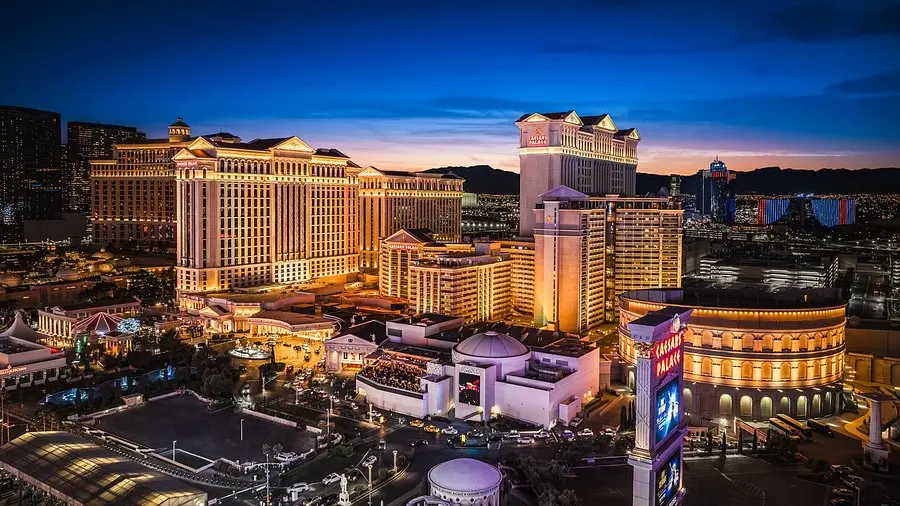
- The Client: One of the largest casino and resort complexes in North America, located in the center of the Las Vegas Strip.
- The Scale: A massive 85-acre property featuring 3,980 hotel rooms across six distinct towers, over 124,000 square feet of casino space, 300,000 square feet of convention space, a 4,300-seat venue, and a 4.5-acre pool complex.
- The Complexity: A sprawling, high-stakes Building Management System (BMS) governed by a vast network of JACE controllers managing 780 critical comfort and operational devices 24/7.
The Challenge: The Reboot Cycle
For the Automation & Controls team at this massive Las Vegas resort, keeping the building environment perfect is a non-negotiable requirement. However, the team was battling a host of invisible, crippling issues: system-wide slowdowns, unresponsive controls, and critical missed schedule changes.
To clear the issues and force the schedules to execute, the team resorted to a relentless, manual cycle of restarting the servers. But the reboots were only a temporary band-aid; the system would inevitably bog down again.
Frustrated, the team assumed the underlying OT network infrastructure—an original Optigo Connect solution—was simply failing under the sheer scale of the 85-acre campus. They believed the hardware was the problem.
The Investigation: Decoding the Traffic
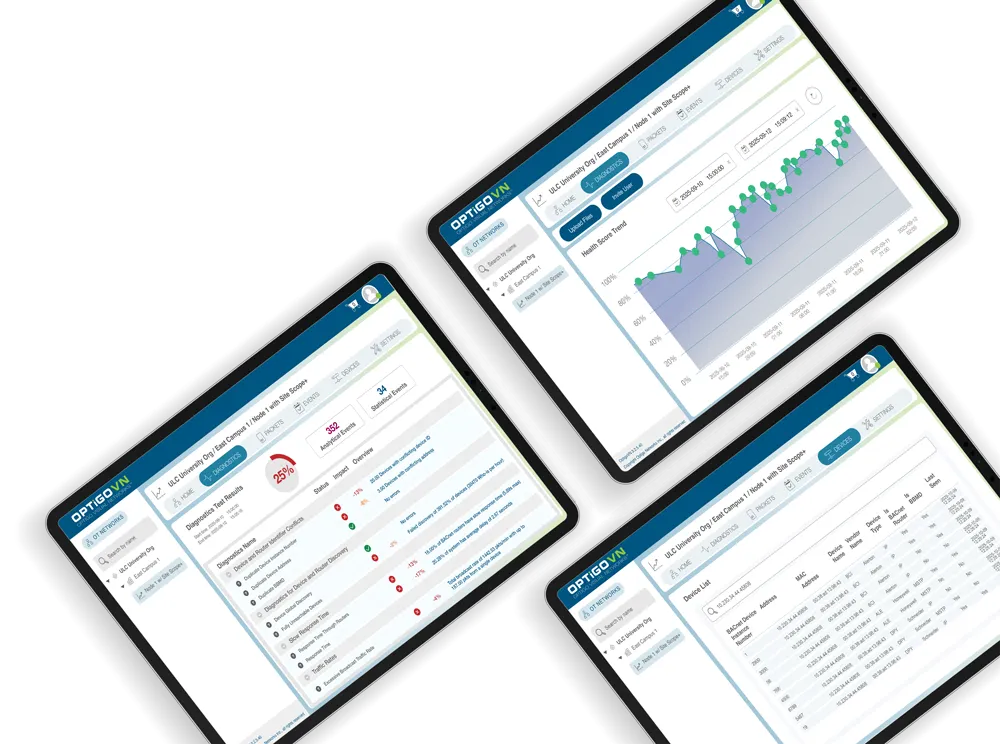
Before ripping out infrastructure, the team brought in Optigo Networks to deploy OptigoVN, the latest-generation OT monitoring and diagnostic suite. The goal was to pull packet captures directly from the JACEs across the system to see what was actually happening on the wire.
OptigoVN’s advanced Site Scope+ diagnostic suite immediately zeroed in on the root cause, revealing a surprising truth: the hardware was completely fine. The issue was entirely driven by software configuration.
The Culprit: Misconfigured Change of Value (COV) thresholds and “Fast” polling settings. Devices across the network had been left with incorrect or overly aggressive COV and read/write polling rates. Specifically, a global “fast policy” setting was triggering data requests nearly every second. This created thousands of unnecessary, relentless requests, generating a tsunami of network traffic that was completely overloading the system’s ability to process it.
The Solution: Slowing Down to Speed Up
The fix wasn’t a massive capital expenditure; it was a targeted, data-driven adjustment. However, without OptigoVN visualizing the traffic, connecting the dots across thousands of devices to find this specific configuration error would have been nearly impossible.
- Policy Adjustment: Working alongside local IT partners, the controls team accessed the system and modified the aggressive polling policies.
- Dialing It Back: They changed the polling frequency for most points from a frantic 1-second interval to a much more reasonable 10 or 60 seconds.
- Continuous Monitoring: To prevent the issue from returning, the Optigo Networks team helped the client set up Optigo’s free traffic capture software, providing continuous monitoring and uploading data every 15 minutes for real-time analysis.
The Result: Visibility, Reliability, and ESG Alignment
The impact of simply adjusting the polling rates was immediate and drastic. System response times improved instantly, and the need for constant server reboots vanished.
The network’s Health Score—which had been sitting at a critical 40%—skyrocketed to a highly optimized 81% overnight.
But the most significant takeaway extended far beyond troubleshooting. For a facility of this immense scale, OptigoVN became the tool that allowed the team to balance the need for a fully optimized, complex schedule with the health of the network.
By eliminating the chaotic network traffic, the team ensured that equipment only ran exactly when it was supposed to. This added visibility has since become a critical component of the resort’s ESG (Environmental, Social, and Governance) mandates, proving that true energy efficiency and guest comfort are only possible when you can actually see what your automation network is doing.