

The pitch for edge computing sounds made for building automation. Process data near where it’s generated. Reduce cloud round-trips. Keep critical systems running even when connectivity drops. It checks every box for the kinds of problems facilities teams deal with daily.
But for teams managing OT networks in hospitals, multi-tenant buildings, pharma facilities, campuses, and data centers, the honest question isn’t whether edge computing is a good idea in principle—it’s whether the hardware, protocols, and operational realities of building automation can actually support it.
The short answer: partially, in a specific and constrained way, and only if your network is already in good shape.
What Edge Computing Is (And Why Everyone Is Talking About It)
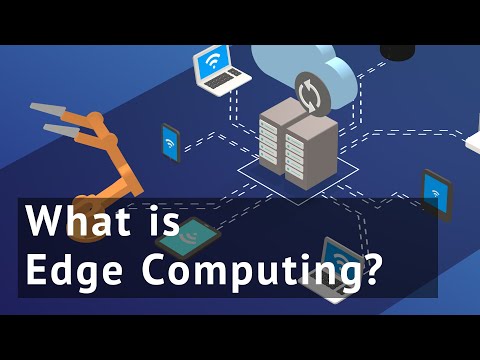
Edge computing means processing data near where it’s generated—on the device itself, a local gateway, or a nearby server—rather than sending everything to a central cloud or datacenter. Only the relevant outputs, anomalies, or summaries travel upstream.
Microsoft Azure describes it simply: edge devices “perform initial processing, filtering, and analysis locally,” determining “what information requires immediate action, what should be stored temporarily, and what needs transmission to central systems.”
The benefits are obvious: faster response times because there’s no cloud round-trip, lower bandwidth consumption because you’re not streaming raw data continuously, and improved resilience because the local system keeps operating even when the WAN goes down.
How It’s Already Working in IT and IoT
Edge computing is well-established in IT environments. In healthcare, bedside processors handle patient vitals and trigger local alerts without waiting for data to reach a central server. In retail, in-store edge devices adjust pricing and signage in real time based on inventory and foot traffic patterns (yes, your grocery store is doing this). Branch offices use edge hardware to manage smart HVAC and security locally, only alerting facility managers when thresholds are crossed—rather than flooding headquarters with constant status updates.
The common thread in all of these: the hardware involved has modern compute capability, runs standard operating systems, and operates on reliable IP networks. The “edge device” might be a ruggedized server, a gateway appliance, or even a workstation-class PC—something capable of running analytics, ML inference, or rule-based logic without intervention.
That matters a lot for what comes next.
Where Edge Computing Could Actually Help Non-Industrial OT
For building automation specifically, the potential use cases are real, even if the path to them is harder than vendor decks suggest.
Hospitals and life-safety environments are arguably the strongest case. Local processing of HVAC control data, negative-pressure isolation room monitoring, and fire suppression system feeds means critical decisions don’t depend on a cloud round-trip or a healthy WAN connection. When a network blip could have patient safety implications, keeping intelligence close to the devices makes operational and regulatory sense.
Data centers face a similar argument for thermal and power monitoring. A localized edge layer that watches PDU and CRAC unit telemetry and responds to thermal anomalies without a cloud dependency could meaningfully reduce risk during outages or connectivity interruptions.
Campuses and multi-tenant buildings running dense IoT sensor networks can hit bandwidth and data management limits quickly. Edge pre-processing—aggregating hundreds of sensor readings into summarized outputs before pushing them upstream—reduces the load on both the network and the cloud platform. This is especially relevant as occupancy sensors, air quality monitors, and smart metering become standard in commercial builds.
Pharma and controlled environments face strict environmental compliance requirements. Edge logging that maintains accurate, tamper-resistant records of temperature and humidity locally, independent of cloud connectivity, is a straightforward fit.
The energy efficiency case is also compelling. A 2025 analysis of edge computing in smart building environments cites research suggesting AI-driven building management platforms have achieved 20–50% reductions in energy consumption in pilot projects — primarily in HVAC-intensive buildings where edge-local processing enables demand-based adjustments in real time rather than on a fixed schedule.
In all these cases, though, the edge capability sits above the building automation controllers—in a gateway or server layer—not inside them. That distinction is the central challenge.
What Edge Computing Requires, and Why Building OT Creates Barriers
For an edge architecture to work, you need three things: compute capability near the data source, reliable data flowing from the devices feeding it, and connectivity infrastructure to move the right data to the right place.
OT networks create friction at all three levels:
The hardware is the obvious constraint. BACnet controllers are designed for determinism and longevity—not compute. A controller installed 10 years ago may have kilobytes of available memory and a processor running in the megahertz range. These are not platforms you run analytics or inference on. The OT network running your building systems was designed to reliably execute control commands, not host software workloads.
Hardware refresh cycles in building automation run 15–20 years. The International Energy Agency estimates that more than 80% of the buildings that will exist in 2050 already exist today — most of them built long before modern network infrastructure was standard. That’s not a design flaw—it’s the model. But it means the controller estate in most commercial buildings today has no realistic path to hosting edge compute directly, regardless of intent.
The protocol layer adds friction. BACnet/IP and MS/TP are designed for device communication and control, not cloud integration or edge middleware. Getting clean data from BACnet devices into an edge processing layer requires protocol translation—a gateway that speaks BACnet on one side and a modern API or message broker on the other. That gateway exists (several vendors make them), but it’s an additional architectural component to plan, deploy, secure, and maintain.
The skills gap is real. Deploying edge infrastructure—even a gateway appliance—requires someone with software and systems integration knowledge that’s not always available on OT teams. Configuring a data pipeline from BACnet through a gateway to a local analytics engine, then to a cloud platform, is a multi-domain problem. Many building automation teams are structured around controls and commissioning, not software architecture. We talked about the skill gap on a recent episode of How to Handshake with the co-founders of Stack and Joules.
Security exposure increases. Adding compute-capable devices to an OT network expands the attack surface. IT/OT convergence brings real benefits, but placing a modern Linux-based edge appliance adjacent to legacy BACnet hardware requires careful segmentation and security planning. An edge node that becomes a lateral movement vector for a threat actor is worse than no edge node at all.
And the data has to be trustworthy first. This is the point that often gets skipped in edge computing discussions: your data is only as reliable as the network that carries it. An edge system fed by a misconfigured, congested, or error-prone OT network won’t produce reliable outputs—it will process bad data efficiently. Duplicate device addresses, broadcast storms, MS/TP token-passing failures: these are the kinds of issues that silently corrupt the data streams an edge system would depend on.
How Realistic Is Adoption in 2026?
Honest assessment by layer:
Gateway-level edge processing
BMS servers and edge appliances aggregate BACnet data locally, run rule-based logic, and forward only exceptions upstream. Common in larger campuses and hospital networks where cloud latency is unacceptable.
AI-assisted FDD at the edge
Purpose-built edge appliances running fault detection and diagnostic logic locally — without a cloud dependency. Vendor support is growing, but deployments are still limited in scale.
Edge compute on BACnet controllers
The installed controller base lacks the memory and compute to run edge workloads. With hardware refresh cycles of 15–20 years and 80%+ of 2050’s buildings already standing, this isn’t a 2026 story.
Gateway-level edge processing: already happening. The most practical form of edge computing in building OT—a gateway device or BMS server that aggregates BACnet data locally, runs rule-based logic or lightweight analytics, and forwards only exceptions or summaries upstream—is deployed and working in larger campuses, hospital networks, and sophisticated commercial buildings today. This is “edge” in the meaningful sense: local intelligence, reduced cloud dependency, maintained operation during WAN outages.
AI-assisted fault detection at the edge: emerging. A growing number of building automation vendors are shipping edge appliances capable of running fault detection and diagnostic logic locally. This brings FDD capability to sites where cloud connectivity is unreliable or where data sovereignty requirements limit what can leave the building. It’s not widespread yet, but the hardware and software exist.
Edge compute on BACnet controllers: not happening in 2026. The installed base simply doesn’t support it. Expecting the endpoint hardware in most buildings to run edge workloads this decade requires either a hardware refresh program that most budgets can’t support, or waiting for the natural lifecycle of older controllers to turn over. Neither happens fast.
The honest framing for 2026 is this: edge computing in building OT is real and valuable at the architecture layer above the controllers. It is not real at the controller layer. Planning your roadmap around the former is productive. Waiting for the latter is not.
The First Steps Worth Actually Taking
The path to edge intelligence in building automation doesn’t start with edge hardware. It starts with network visibility.
Know your OT network before you add complexity to it. Before any edge or cloud layer can work reliably, you need a clear picture of what devices are on your network, how they’re behaving, and where the problems are hiding. Generic IT monitoring tools won’t give you that—they see switches and ports, not BACnet device behavior. Purpose-built OT monitoring tools decode the protocols your building systems actually speak and surface the issues that most directly affect data quality.
OptigoVN provides portfolio-wide OT network health visibility with over 30 BACnet-specific diagnostic tests. It surfaces duplicate device addresses, broadcast storms, MS/TP configuration issues, and other problems that silently degrade the data quality any downstream edge or analytics system depends on.
Establish data integrity as a prerequisite, not an afterthought. The sections above on data integrity in OT networks apply directly here. Fix the network issues that cause data corruption or loss before introducing edge processing. If you’re serious about getting value from edge intelligence, stable and accurate data is the foundation.
Identify where edge intelligence actually solves a problem for your environment. In a hospital, the case for keeping life-safety processing local is clear and straightforward. In a commercial office building, the benefit may be more modest—bandwidth reduction and basic anomaly detection. Let your operational requirements define the use case rather than working backwards from a technology trend.
Start with a gateway or edge server, not a controller replacement. A purpose-built edge appliance sitting between your BMS and your cloud platform is a realistic first deployment. Several building automation vendors offer these. So does cloud-based OT management infrastructure that already handles some of this aggregation work.
Use continuous monitoring to validate what you’ve built. Once edge components are in place, OT monitoring is what tells you whether the system is performing as intended. OptigoVN’s real-time alerting and historical trend data let you confirm that data quality held after introducing new network components—and catch any issues the new architecture creates.
The Honest Takeaway
Edge computing works in building OT. Just not everywhere, not on all your hardware, and not without preparation.
The value is real at the gateway layer for hospitals, data centers, campuses, and facilities where local processing of critical data matters. The path there runs through network health, data integrity, and a clear-eyed view of what the existing hardware can actually support.
If your OT network has unresolved issues—persistent broadcast storms, duplicate devices, degraded MS/TP segments—no edge layer will fix that. It will process bad data faster. Fix the network first. Then add intelligence. That’s the sequence that actually works.
Ready to understand what’s actually happening on your OT network before adding complexity to it? Start a free OptigoVN trial or book a demo to see what’s on your network and how it’s performing.
FAQ
What is edge computing in the context of building automation?
Edge computing means processing data locally — on a gateway, server, or appliance near your building systems — rather than sending everything to the cloud. In building automation, it typically refers to a layer between your BACnet devices and your central BMS or cloud platform that filters and processes data on-site.
Why does edge computing matter for OT networks?
OT networks in buildings like hospitals, campuses, and data centers generate continuous streams of sensor data. Processing that locally reduces cloud bandwidth costs, keeps critical systems running during WAN outages, and enables faster responses to conditions that can’t wait for a cloud round-trip.
Can BACnet controllers run edge computing workloads?
Not realistically in 2026. Most installed BACnet controllers were designed for determinism and longevity, not compute. Many have kilobytes of memory and processors running in the megahertz range. Edge workloads run on the layer above the controllers — gateways and servers — not the controllers themselves.
What’s the difference between edge computing and cloud-based OT management?
Cloud-based OT management sends data upstream for storage, analysis, and reporting. Edge computing processes data locally first, then sends only what’s relevant upstream. In practice, most modern deployments combine both — edge for real-time response, cloud for long-term trend analysis and cross-site visibility.
Which building types benefit most from edge computing in their OT networks?
Hospitals and life-safety environments have the clearest case, since local processing of HVAC and fire suppression data removes cloud dependency from critical decisions. Data centers, pharma facilities, and large campuses with dense IoT sensor networks also benefit from the bandwidth reduction and reliability edge processing provides.
What are the main barriers to adopting edge computing in building OT networks?
The four biggest are: legacy hardware that can’t support compute workloads, the skills gap between OT teams and software infrastructure, the expanded security attack surface that comes with adding compute nodes to an OT network, and hardware refresh cycles of 15–20 years that slow the natural turnover of the installed base.
How realistic is edge computing adoption for building automation teams in 2026?
Gateway-level edge processing is already deployed and working in more sophisticated buildings. AI-assisted fault detection at the edge is emerging. True edge compute running on BACnet endpoint controllers is not a 2026 story. The opportunity is real at the architecture layer above the controllers, not at the device level.
What should a building automation team do first before adopting edge computing?
Establish network health visibility. Any edge or analytics layer depends on clean, reliable data from the underlying OT network. That means using purpose-built OT monitoring tools to surface issues like duplicate device addresses, broadcast storms, and MS/TP configuration problems before adding complexity on top.
Will edge computing replace cloud-based OT monitoring?
No. The two solve different problems. Edge handles time-sensitive, local decisions and reduces cloud dependency for critical functions. Cloud handles long-term trending, cross-building analysis, and centralized visibility. Most mature building automation strategies will use both — the question is where the boundary sits and what logic runs on which side of it.
FAQ’s a created with the help of a generative AI.