
A BACnet point reporting 72.4 could be a zone temperature, a supply air setpoint, or a fan speed. Unless the point carries a semantic tag saying which, analytics software has to guess. When we first explained Project Haystack and semantic tagging, the industry was betting that a shared vocabulary of tags would end the guessing.
Several years later, that bet has partly paid off. Tags have grown into full semantic models that describe how equipment connects, not just what each point is, and Project Haystack 5 can now check whether a building’s tags are correct. That aside, the official ASHRAE standard meant to bring these efforts together is running behind schedule, and the industry looks less likely to end up with the single shared standard it set out to build in 2018.
Here is why semantic tagging still depends on the OT network underneath, where the standards stand now, and what is coming next.
Catch Up: What Is Semantic Tagging?
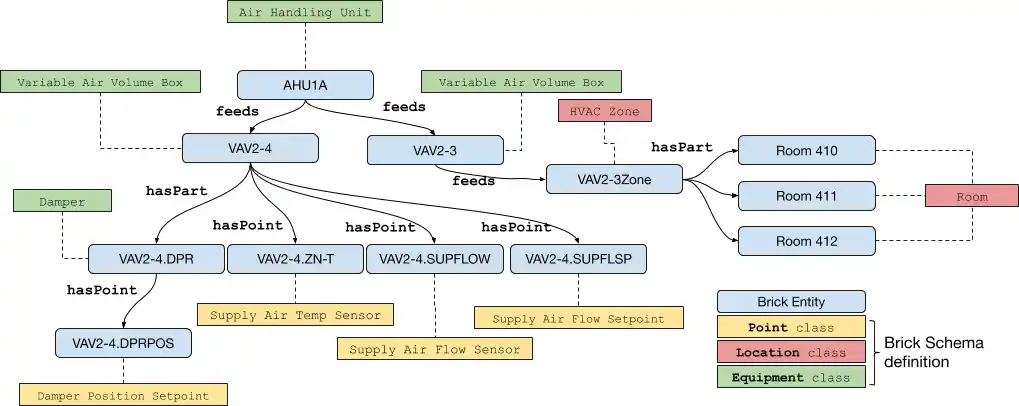
Semantic tagging attaches standardized, machine-readable labels to building data so software can understand what a point represents without a person needing to decode it for the system and everyone else. A point named “AHU1_SAT” means something to the technician who programmed it. A point tagged as a supply air temperature sensor on a specific air handler means the same thing to every application that reads it.
The gap this closes is mostly manual labor. The U.S. Department of Energy describes building software configuration as “largely manual,” because point mapping, the work of linking sensor and actuator names to software inputs and outputs, is repeated for nearly every building. Semantic models replace that guesswork with explicit descriptions of equipment and how it connects.
What Can Semantic Tagging Do for Your OT Network?
Network diagnostics usually identify devices by address and instance number. Semantic tags add what each device is and what it serves, which helps in three ways:
- Triage by impact. If you know a controller runs the air handler for a lab, not just that it’s device 2014, you can fix its faults before the same fault on a restroom exhaust fan.
- Faster tracing. Semantic models record which equipment serves which spaces, so you can follow a network fault to the rooms it affects, or trace a comfort complaint back to the controller behind it.
- Consistency across sites. A shared vocabulary makes inventories and network health comparable across a portfolio, even when a different integrator programmed each building.
What tags can’t do is make sure the data arrives. A perfectly tagged temperature reading is still wrong if Change of Value traffic is flooding or stalling, if polling drops reads, or if two controllers share a device instance. Fault detection goes quiet when the network degrades, which is why OT network readiness comes before analytics. Energy-as-a-Service provider ENFRA, for example, diagnoses aging BACnet networks with OptigoVN before adding fault detection. The same applies to predictive analytics and digital twins.
OptigoVN covers that layer. It runs over 30 diagnostics on BACnet/IP and MS/TP traffic and traces each finding to a specific device ID, so you can confirm the devices your model relies on are present, reachable, and reporting.
Tagged your building? Now prove the data behind the tags is real. Run an OptigoVN capture and see which points your model can actually trust.
What Is Project Haystack?
Project Haystack started as a collaborative exercise in tag vocabulary: simple name/value pairs such as site, equip, ahu, and temp that, combined, describe an entity.
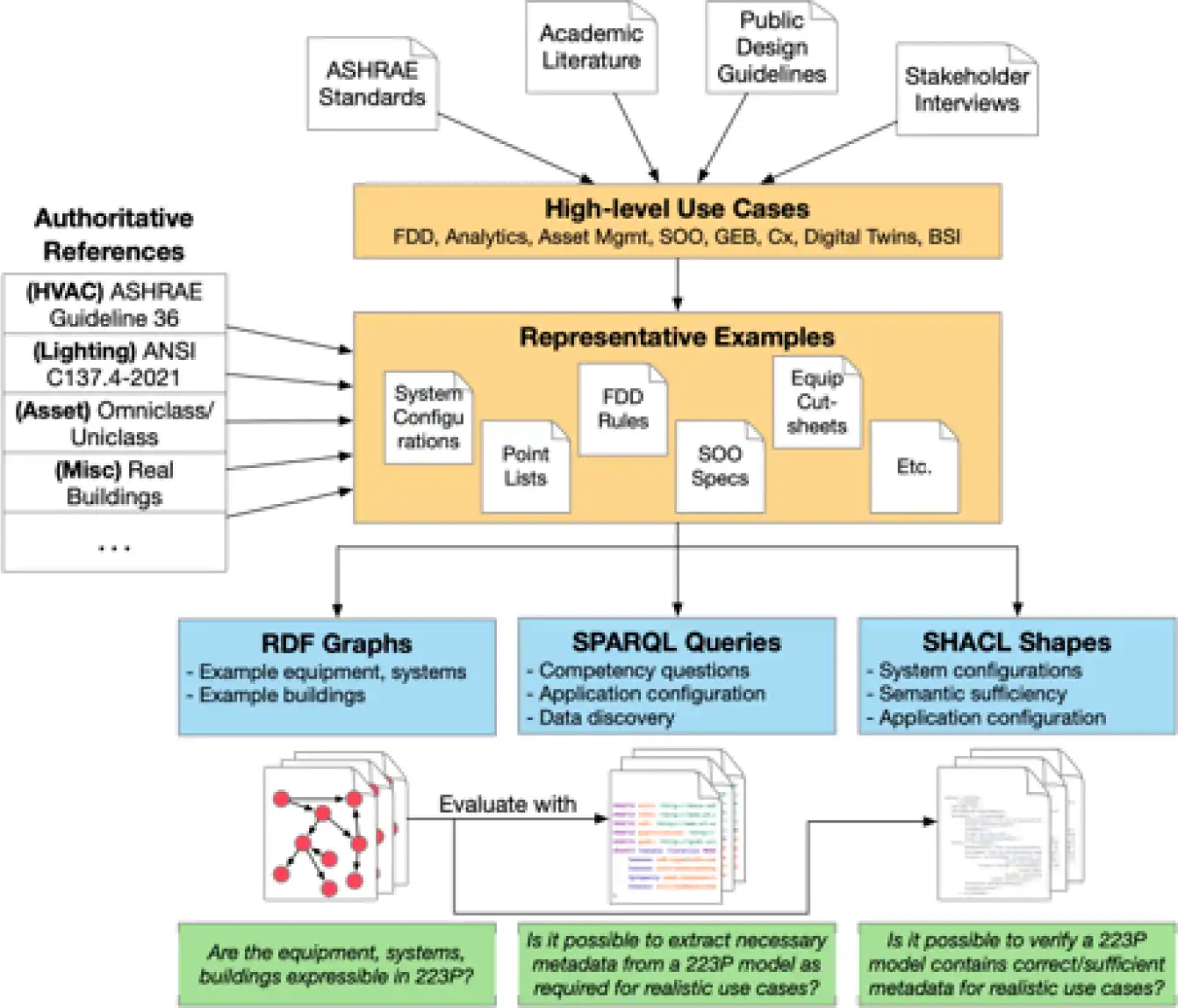
In fact, Haystack is one of three major efforts working to improve semantic tagging. Brick Schema models a building as a graph of equipment, points, and relationships. ASHRAE’s proposed Standard 223P aims to formalize a semantic model inside the same standards process that maintains BACnet. Their paths have moved closer over the past several years, but they have not merged.
Haystack 5: What’s Changed?
The short version: Haystack has moved from telling you how to tag to checking whether you tagged things correctly.
- Haystack 4 added structure. In a 2019 preview, John Petze explained that Haystack 4 replaced the flat tag list with “defs,” organized terms into a subtype taxonomy, added a model for spaces, and was “designed to provide high-fidelity RDF expression of Haystack models.” Tagging itself did not change.
- Xeto and Haystack 5 added validation. Xeto, a schema language for Haystack, was completed in 2024. At Haystack Connect 2025 in Washington, D.C., the project unveiled Haystack 5, built around Xeto. The release lists formal schema definitions, built-in validation, inheritance and typing, and export to RDF through Turtle files.
Validation is now the center of the project’s messaging. The 2025 Project Haystack webinar announcement called metadata validation “the cornerstone of achieving true interoperability in smart buildings.”
What About Brick and ASHRAE 223P?
In 2018, ASHRAE’s BACnet Committee, Project Haystack, and Brick announced a collaboration to “integrate Haystack tagging and Brick data modeling concepts into the new proposed ASHRAE Standard 223P.” Addendum 135-2012ba added an optional Tags property to every BACnet object type, giving devices a place to carry semantic tags.
Brick itself has kept up a steady release cadence. According to its GitHub release notes, Brick is phasing out its own location classes in favor of RealEstateCore, and a version 1.5.0 release candidate is now available.
223P opened its first advisory public review in March 2024. A second advisory review followed, and its materials are posted on Open223, a companion site whose tools are not developed or endorsed by ASHRAE.
Where Does Semantic Tagging Stand in 2026?
The industry has converged on a shared foundation, not a single standard. Haystack 5 exports to RDF, while Brick and 223P are built on RDF with SHACL rules. That common layer makes translation between models practical, but the DOE summary cited above is blunt about the existing schemas: “None is a consensus standard.”
Translation tools are filling the gap. The BuildingMOTIF project is a Python toolkit for creating, storing, and validating building metadata, and its developers plan support for Brick, Haystack, and 223P.
223P itself is still a proposed standard: ASHRAE’s own standards index lists it as Standard 223P as of this writing.
What Comes Next?
Expect steady progress over the next year rather than big changes:
- 223P moves toward final publication. It has been through two rounds of public review, and it was one of three topics BACnet committee leaders raised when we spoke with them about upcoming changes.
- Haystack 5 covers more equipment. Community working groups are adding definitions for drives, motors, valves, and boilers.
- Brick lines up with other models. Its next release adds more 223P examples and starts matching its lighting definitions to RealEstateCore, another building data model.
- BACnet gets closer to the models. A proposed change to the BACnet standard would express BACnet data in the same format the semantic models use, which would make the two easier to connect, according to a recent article from AutomatedBuildings.
In 2018, the goal was “a single and widely used global standard.” That hasn’t happened. What exists instead is three models that share a common format and can translate between each other. That may be the more practical result, since few building owners are likely to retag everything just to switch models.
The bigger goal hasn’t changed: building software that can set itself up instead of being configured by hand, one point at a time.
FAQ
What is semantic tagging in building automation?
Semantic tagging labels building data with standardized, machine-readable terms so software knows what each point represents. It replaces reliance on point names, which vary by installer, with consistent descriptions of equipment, points, and their relationships.
What is the difference between Project Haystack and Brick Schema?
Project Haystack began as a tag vocabulary and now adds formal schemas and validation through Xeto in Haystack 5. Brick models buildings as an RDF graph with SHACL rules. Both can be expressed in RDF, which makes translation between them practical.
Is ASHRAE 223P a published standard?
Not as of October 2026. 223P has gone through two rounds of advisory public review, and NIST had targeted publication in fiscal year 2026, but it is still listed as a proposed standard.
What is Haystack 5?
Haystack 5 is the next major version of Project Haystack, unveiled at Haystack Connect 2025. It introduces Xeto, a schema language that adds validation, typing, and inheritance, plus export to RDF.
FAQs are generated with the assistance of generative AI.